# Content Server
[](https://github.com/foomo/contentserver/actions/workflows/test.yml)
[](https://goreportcard.com/report/github.com/foomo/contentserver)
[](https://godoc.org/github.com/foomo/contentserver)
[](https://github.com/foomo/contentserver/actions)
Serves content tree structures very quickly.
## Concept
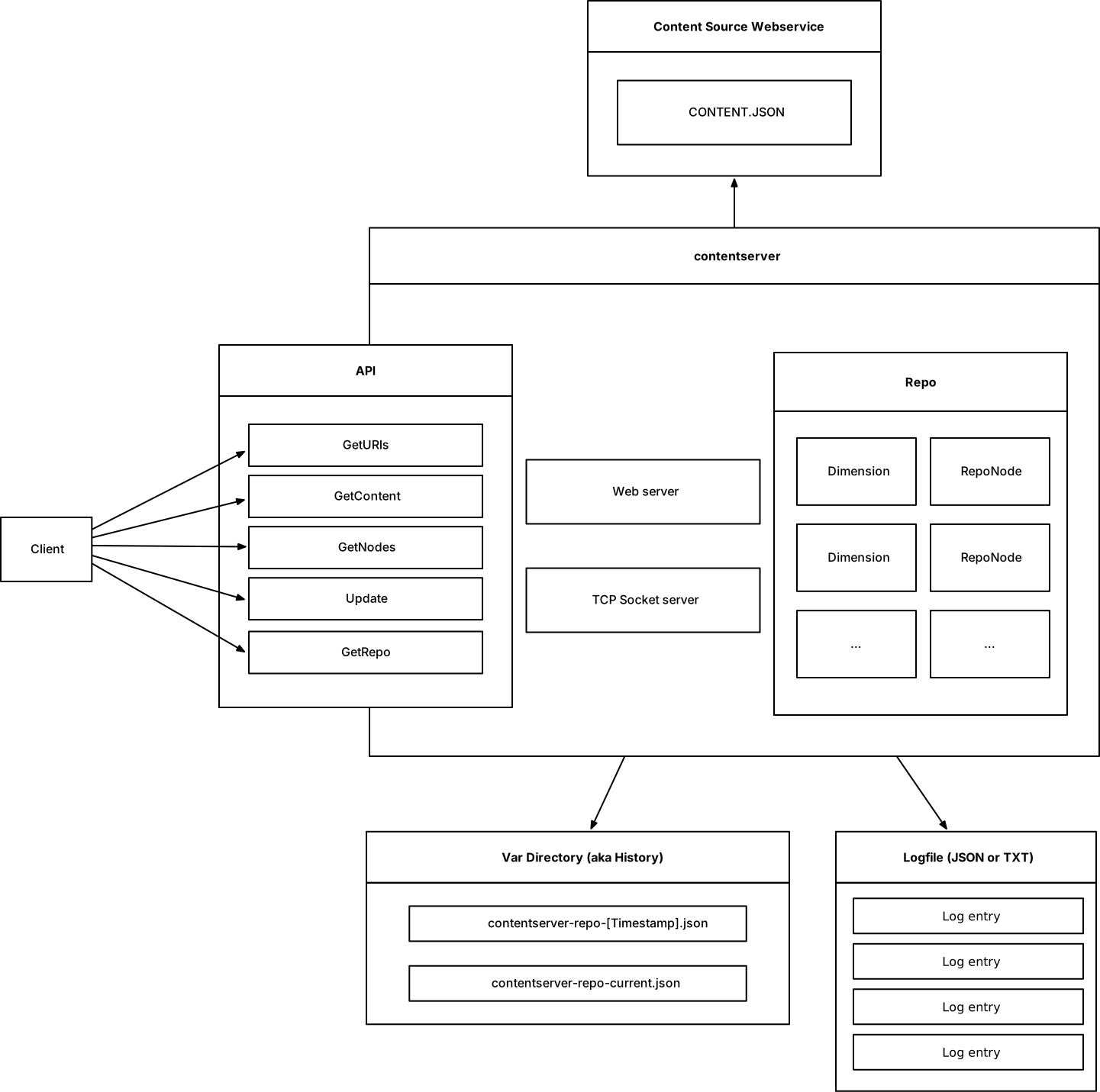
A Server written in GoLang to mix and resolve content from different content sources, e.g. CMS, Blog, Shop and many
other more. The server provides a simple to use API for non blocking content repository updates, to resolve site content
by an URI or to get deep-linking multilingual URIs for a given contentID.
It's up to you how you use it and which data you want to export to the server. Our intention was to write a fast and
cache hazzle-free content server to mix different content sources.
### Overview
 ## Export Data
All you have to do is to provide a tree of content nodes as a JSON encoded RepoNode.
| Attribute | Type | Usage |
|---------------|:----------------------:|------------------------------------------------------:|
| Id | string | unique id to identify the node |
| MimeType | string | mime-type of the node, e.g. text/html, image/png, ... |
| LinkId | string | (symbolic) link/alias to another node |
| Groups | []string | access control |
| URI | string | URI |
| Name | string | name |
| Hidden | bool | hide in menu |
| DestinationId | string | alias / symlink handling |
| Data | map[string]interface{} | payload data |
| Nodes | map[string]*RepoNode | child nodes |
| Index | []string | contains the order of of nodes |
### Tips
- If you do not want to build a multi-market website define a generic market, e.g. call it *universe*
- keep it lean and do not export content which should not be accessible at all, e.g. you are working on a super secret
fancy new category of your website
- Hidden nodes can be resolved by their uri, but are hidden on nodes
- To avoid duplicate content provide a DestinationId ( = ContentId of the node you want to reference) instead of URIs
## Request Data
There is a PHP Proxy implementation for foomo in [Foomo.ContentServer](https://github.com/foomo/Foomo.ContentServer).
Feel free to use it or to implement your own proxy in the language you love. The API should be easily to implement in
every other framework and language, too.
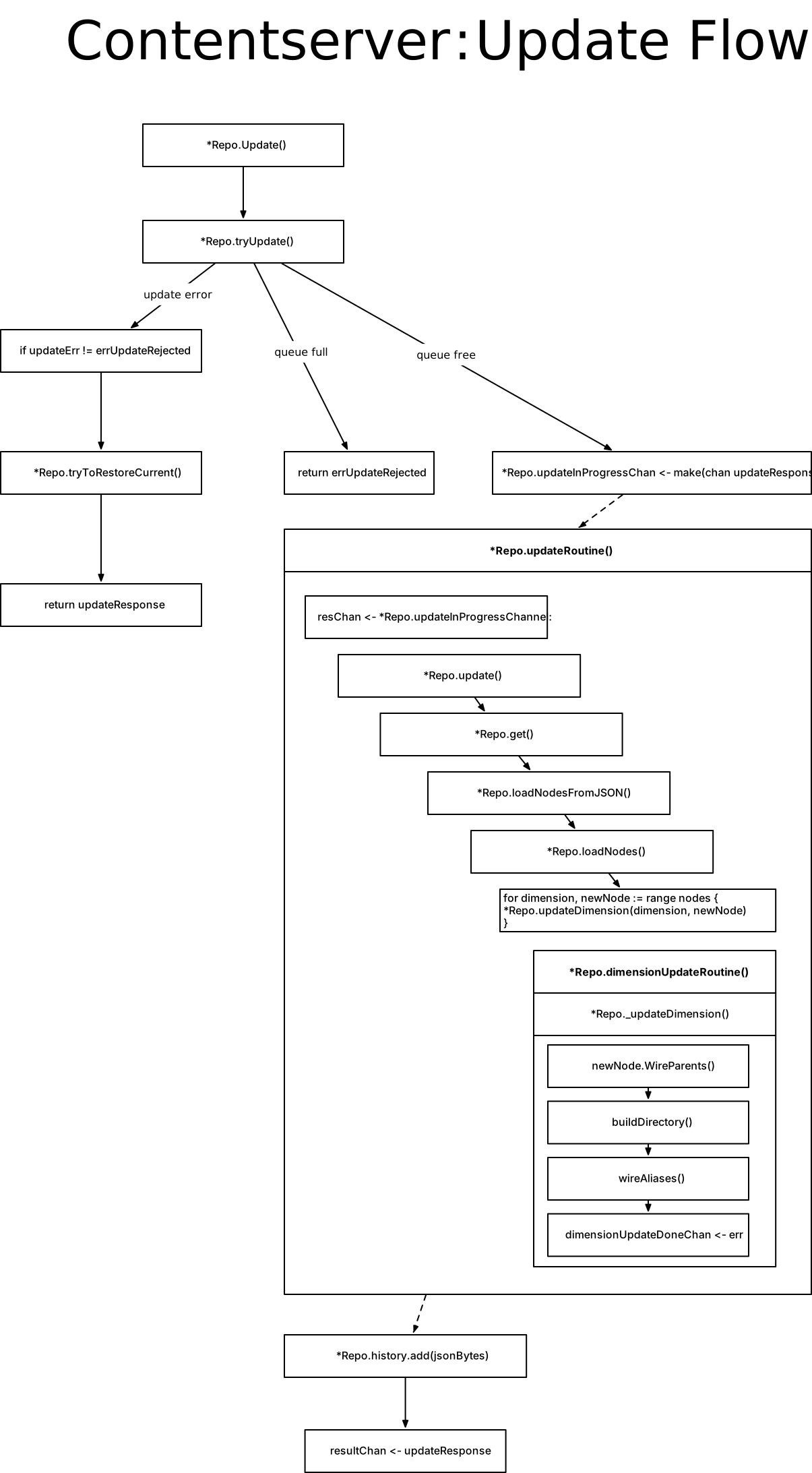
## Update Flowchart
## Export Data
All you have to do is to provide a tree of content nodes as a JSON encoded RepoNode.
| Attribute | Type | Usage |
|---------------|:----------------------:|------------------------------------------------------:|
| Id | string | unique id to identify the node |
| MimeType | string | mime-type of the node, e.g. text/html, image/png, ... |
| LinkId | string | (symbolic) link/alias to another node |
| Groups | []string | access control |
| URI | string | URI |
| Name | string | name |
| Hidden | bool | hide in menu |
| DestinationId | string | alias / symlink handling |
| Data | map[string]interface{} | payload data |
| Nodes | map[string]*RepoNode | child nodes |
| Index | []string | contains the order of of nodes |
### Tips
- If you do not want to build a multi-market website define a generic market, e.g. call it *universe*
- keep it lean and do not export content which should not be accessible at all, e.g. you are working on a super secret
fancy new category of your website
- Hidden nodes can be resolved by their uri, but are hidden on nodes
- To avoid duplicate content provide a DestinationId ( = ContentId of the node you want to reference) instead of URIs
## Request Data
There is a PHP Proxy implementation for foomo in [Foomo.ContentServer](https://github.com/foomo/Foomo.ContentServer).
Feel free to use it or to implement your own proxy in the language you love. The API should be easily to implement in
every other framework and language, too.
## Update Flowchart
 ### Usage
```bash
$ contentserver -h
Usage of contentserver:
-address string
address to bind socket server host:port
-debug
toggle debug mode
-free-os-mem int
free OS mem every X minutes
-heap-dump int
dump heap every X minutes
-var-dir string
where to put my data (default "/var/lib/contentserver")
-version
version info
-webserver-address string
address to bind web server host:port, when empty no webserver will be spawned
-webserver-path string
path to export the webserver on - useful when behind a proxy (default "/contentserver")
```
## License
Copyright (c) foomo under the LGPL 3.0 license.
### Usage
```bash
$ contentserver -h
Usage of contentserver:
-address string
address to bind socket server host:port
-debug
toggle debug mode
-free-os-mem int
free OS mem every X minutes
-heap-dump int
dump heap every X minutes
-var-dir string
where to put my data (default "/var/lib/contentserver")
-version
version info
-webserver-address string
address to bind web server host:port, when empty no webserver will be spawned
-webserver-path string
path to export the webserver on - useful when behind a proxy (default "/contentserver")
```
## License
Copyright (c) foomo under the LGPL 3.0 license.