| .github | ||
| .husky | ||
| bin | ||
| build | ||
| client | ||
| cmd | ||
| content | ||
| docs/assets | ||
| pkg | ||
| requests | ||
| responses | ||
| .editorconfig | ||
| .gitignore | ||
| .golangci.yml | ||
| .goreleaser.yml | ||
| .husky.yaml | ||
| contentserver.graffle | ||
| go.mod | ||
| go.sum | ||
| LICENSE | ||
| main.go | ||
| Makefile | ||
| README.md | ||

Content Server


Serves content tree structures very quickly.
Concept
A Server written in GoLang to mix and resolve content from different content sources, e.g. CMS, Blog, Shop and many other more. The server provides a simple to use API for non blocking content repository updates, to resolve site content by an URI or to get deep-linking multilingual URIs for a given contentID.
It's up to you how you use it and which data you want to export to the server. Our intention was to write a fast and cache hazzle-free content server to mix different content sources.
Overview

Export Data
All you have to do is to provide a tree of content nodes as a JSON encoded RepoNode.
| Attribute | Type | Usage |
|---|---|---|
| Id | string | unique id to identify the node |
| MimeType | string | mime-type of the node, e.g. text/html, image/png, ... |
| LinkId | string | (symbolic) link/alias to another node |
| Groups | []string | access control |
| URI | string | URI |
| Name | string | name |
| Hidden | bool | hide in menu |
| DestinationId | string | alias / symlink handling |
| Data | map[string]interface{} | payload data |
| Nodes | map[string]*RepoNode | child nodes |
| Index | []string | contains the order of of nodes |
Tips
- If you do not want to build a multi-market website define a generic market, e.g. call it universe
- keep it lean and do not export content which should not be accessible at all, e.g. you are working on a super secret fancy new category of your website
- Hidden nodes can be resolved by their uri, but are hidden on nodes
- To avoid duplicate content provide a DestinationId ( = ContentId of the node you want to reference) instead of URIs
Request Data
There is a PHP Proxy implementation for foomo in Foomo.ContentServer. Feel free to use it or to implement your own proxy in the language you love. The API should be easily to implement in every other framework and language, too.
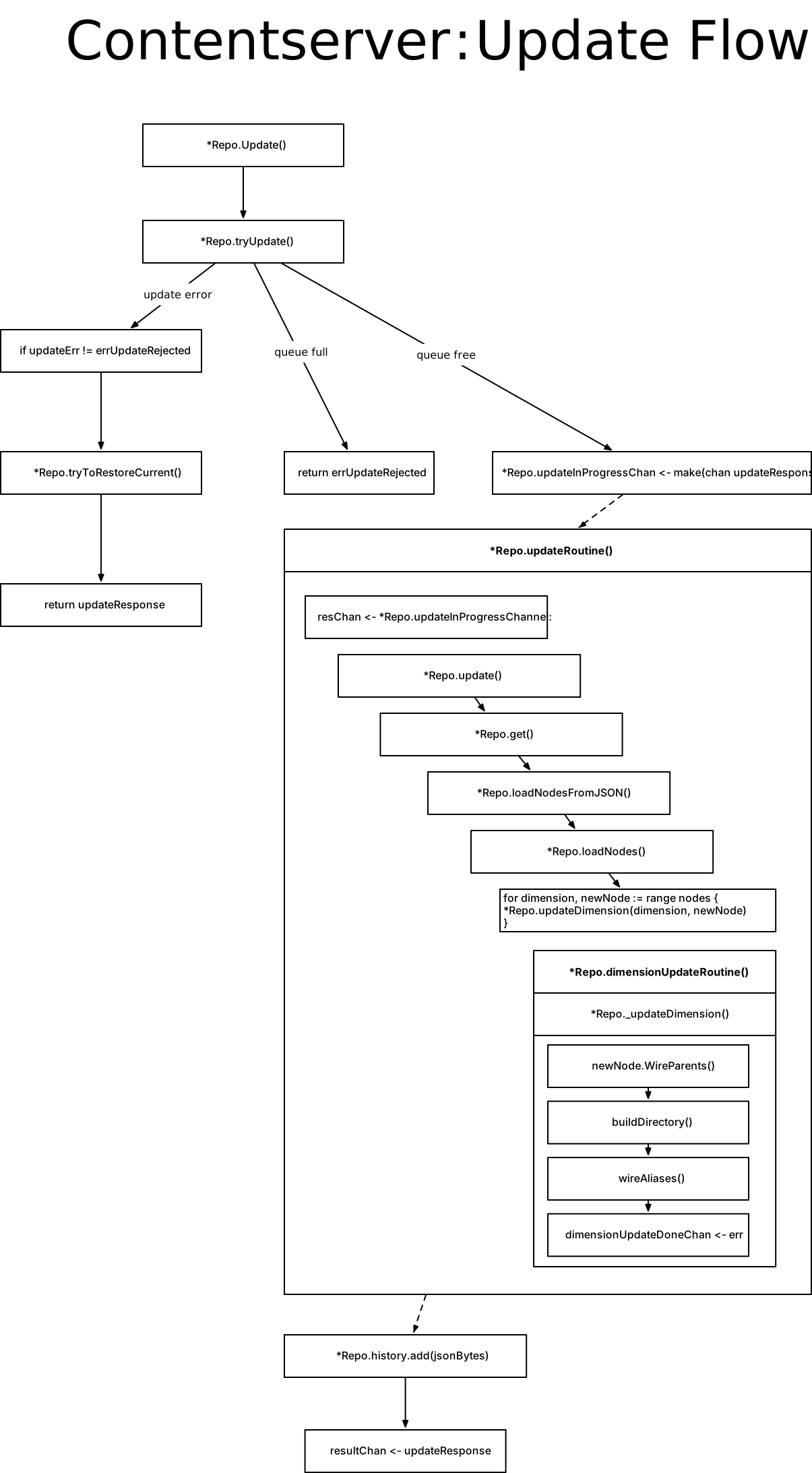
Update Flowchart
Usage
$ contentserver -h
Usage of contentserver:
  -address string
    	address to bind socket server host:port
  -debug
    	toggle debug mode
  -free-os-mem int
    	free OS mem every X minutes
  -heap-dump int
    	dump heap every X minutes
  -var-dir string
    	where to put my data (default "/var/lib/contentserver")
  -version
    	version info
  -webserver-address string
    	address to bind web server host:port, when empty no webserver will be spawned
  -webserver-path string
    	path to export the webserver on - useful when behind a proxy (default "/contentserver")
License
Copyright (c) foomo under the LGPL 3.0 license.